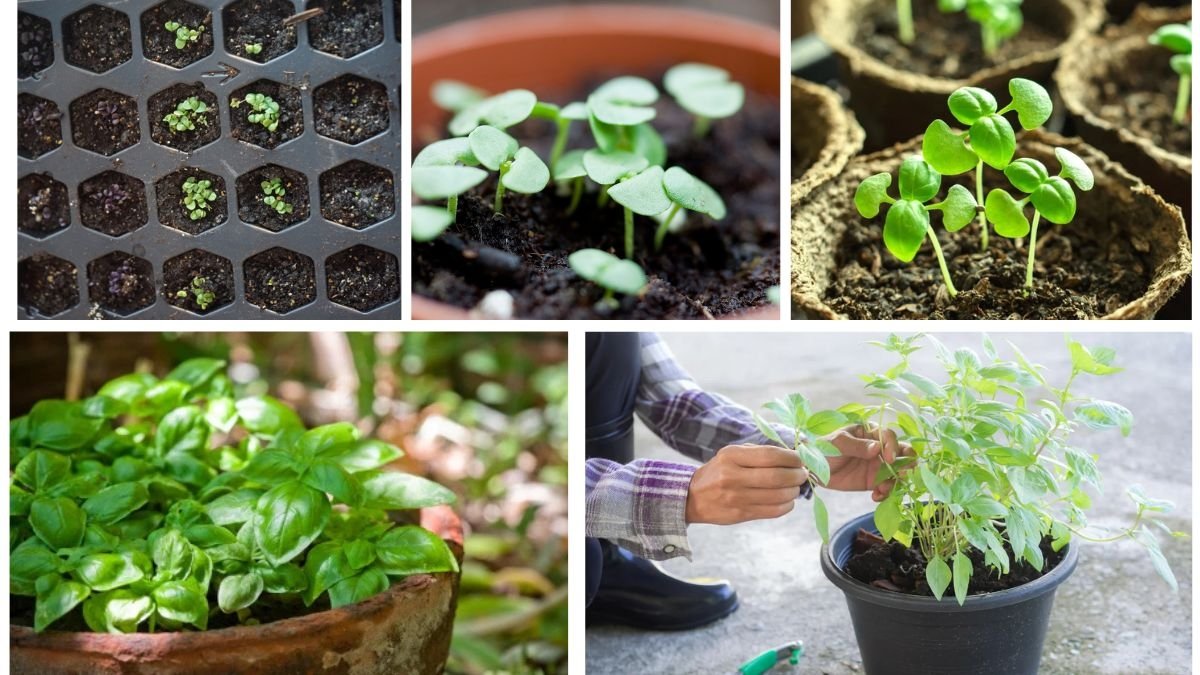
Basil, known as the “king of herbs,” is one of the most beloved plants in home gardens around the world. With its sweet aroma, rich flavor, and versatility in dishes like pasta, salads, soups, and pestos, basil has earned a spot as a must-have kitchen herb. Growing basil at home is not only cost-effective but also provides a fresh and endless supply of leaves whenever you need them.
For beginners, starting basil from seeds may seem challenging, but with the right techniques, anyone can enjoy success. In this guide, we’ll walk step-by-step through how to grow basil from seeds, ensuring you end up with lush, green plants and plenty of flavorful harvests.
Why Grow Basil from Seeds?
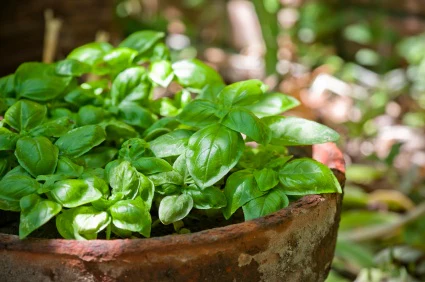
You can easily purchase basil plants from nurseries, but growing from seeds has many advantages:
- Cost-effective – A packet of seeds can produce dozens of plants for the same price as one nursery seedling.
- Variety – Seed packets offer a wide range of basil types like sweet basil, lemon basil, Thai basil, and purple basil, giving you more options.
- Satisfaction – Watching your basil sprout from tiny seeds into mature plants is rewarding and fun.
- Continuous harvest – You can start multiple batches of seeds throughout the season for an ongoing supply.
Choosing the Right Basil Seeds
Before planting, decide which basil variety best suits your taste and purpose:

- Sweet Basil (Genovese) – The most common variety, perfect for Italian dishes and classic pesto.
- Thai Basil – Spicy, licorice-like flavor, great for Asian cuisine.
- Lemon Basil – Citrusy fragrance and flavor, wonderful in teas and fish dishes.
- Purple Basil – Stunning deep-purple leaves with a slightly spicier flavor, excellent for decorative gardens.
For beginners, sweet basil is the easiest to start with, thanks to its fast germination and wide use in cooking.
Materials You’ll Need
To grow basil successfully from seeds, gather the following:
- Basil seeds of your chosen variety
- Seed-starting tray or small pots
- Seed-starting mix (light, well-draining soil)
- Spray bottle for watering
- Clear plastic cover or plastic wrap (for humidity)
- Sunny windowsill or grow light
- Fertilizer (organic liquid fertilizer works best)
- Small gardening scissors for harvesting
Step-by-Step Guide to Growing Basil from Seeds

1. Prepare the Soil Mix
Use a high-quality seed-starting mix instead of garden soil. This type of mix is lightweight, sterile, and drains well—important for delicate seedlings. Fill your seed tray or small pots with the mix, leaving a little space at the top.
2. Plant the Seeds
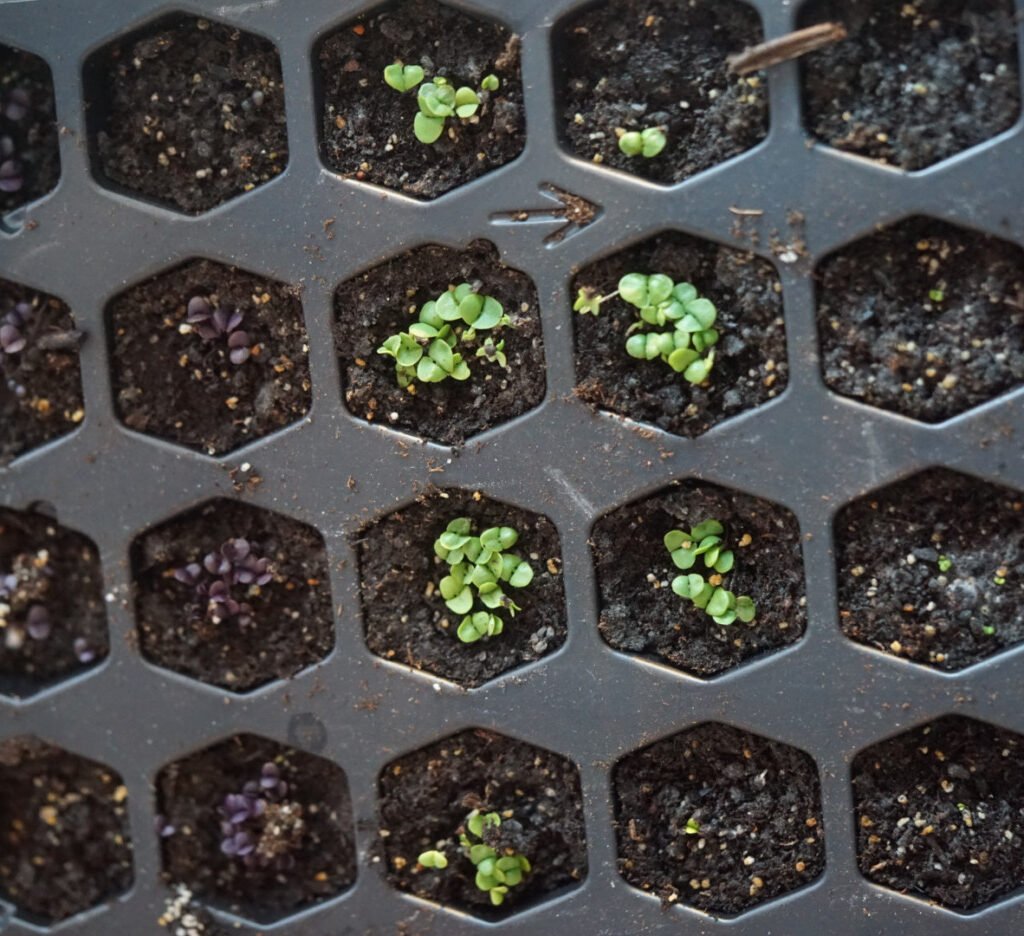
- Sprinkle 2–3 basil seeds per cell or pot.
- Cover them lightly with about 1/4 inch of soil. Basil seeds need some light to germinate, so don’t bury them too deeply.
- Mist the surface gently with a spray bottle to moisten the soil.
3. Create a Humid Environment
Cover the tray with a clear plastic lid or plastic wrap to retain moisture and warmth. This mini-greenhouse effect encourages faster germination.
4. Provide Warmth and Light
- Basil seeds germinate best in warm soil between 70–75°F (21–24°C). Keep your seed tray in a warm room or use a seed heat mat.
- Place the tray on a sunny windowsill where it gets 6–8 hours of sunlight daily. If sunlight is limited, use grow lights.
5. Water Carefully
Keep the soil moist but not soggy. Basil seeds are tiny and can rot if overwatered. Use a spray bottle or bottom-watering method (placing the tray in a shallow dish of water for a few minutes).
6. Germination
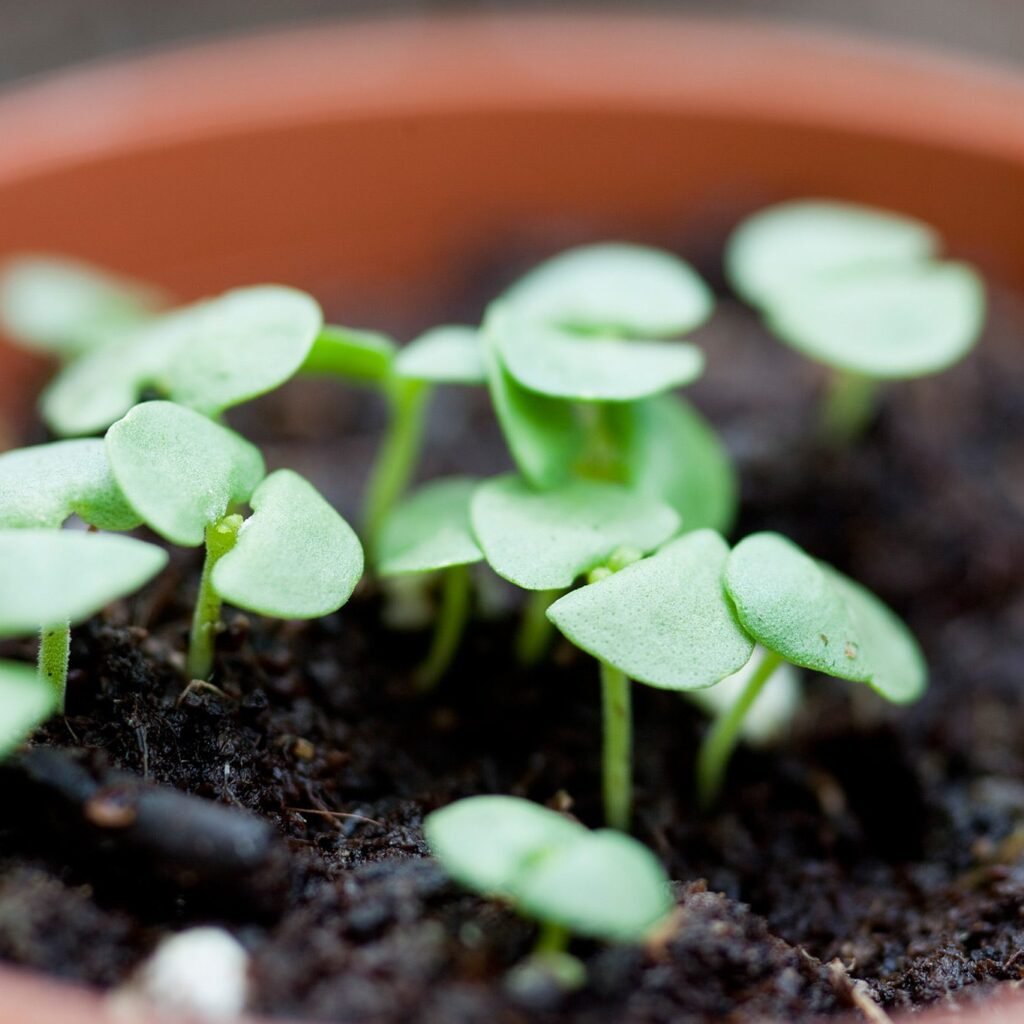
Basil seeds typically sprout within 5–10 days. Once seedlings appear, remove the plastic cover to allow airflow and prevent mold growth.
7. Thin the Seedlings
When seedlings have developed their first true leaves, thin them by snipping weaker plants at the base with scissors. Keep only the strongest seedling per cell or pot.
8. Transplanting Seedlings
After 3–4 weeks, when the seedlings are 3–4 inches tall and the weather is warm (above 60°F / 15°C), they can be transplanted outdoors or into larger pots.
- Space basil plants 10–12 inches apart to allow good airflow.
- Choose a location with full sun (at least 6–8 hours daily).
Caring for Your Basil Plants
Growing basil doesn’t stop after transplanting. Here’s how to keep your plants healthy and productive:
1. Sunlight
Basil thrives in full sun. Place pots on sunny balconies, patios, or windowsills. Indoors, supplement with grow lights if natural light is weak.
2. Watering
Keep the soil consistently moist but avoid waterlogging. Basil prefers deep watering once the top inch of soil feels dry. Morning watering is best to reduce fungal issues.
3. Fertilizing
Feed basil with a diluted liquid fertilizer every 2–3 weeks. Too much fertilizer can reduce flavor, so keep it moderate.

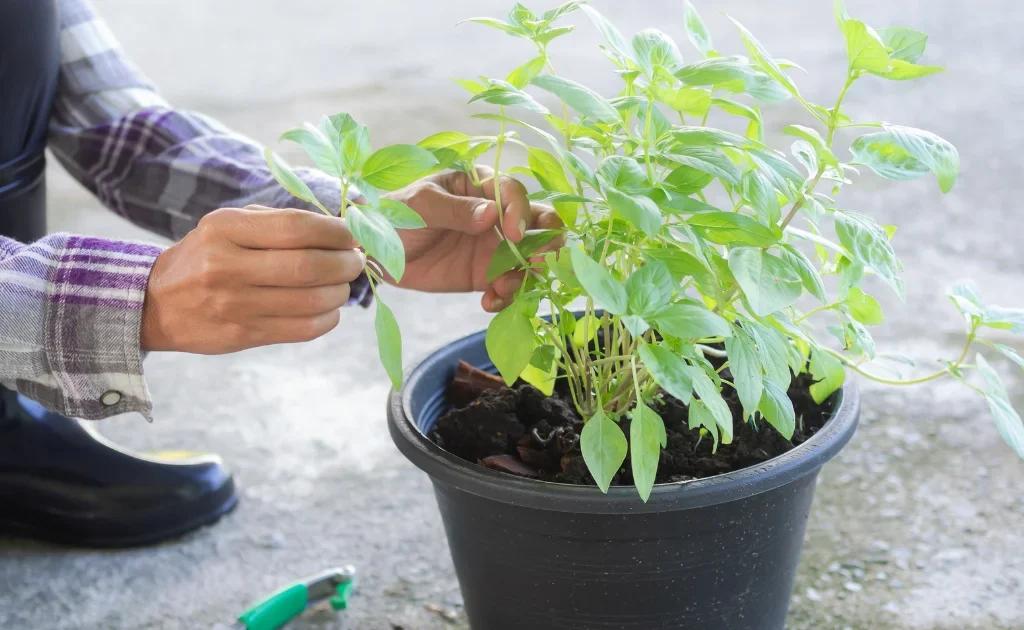
4. Pinching and Pruning
To encourage bushy growth, pinch off the top leaves when the plant has 6–8 sets of leaves. Regularly removing the tips prevents basil from getting leggy and promotes more branching.
5. Prevent Flowering
If basil starts producing flower buds, pinch them off immediately. Once it flowers, the leaves become bitter and lose flavor.
6. Pests and Diseases
Watch out for pests like aphids, spider mites, and whiteflies. Neem oil or insecticidal soap can help control them. Ensure good airflow to prevent fungal diseases like downy mildew.
Harvesting Basil
One of the best parts of growing basil is harvesting its fresh, aromatic leaves.
- Begin harvesting when plants are about 6–8 inches tall.
- Always cut above a pair of leaves so the plant continues to branch and grow.
- Never remove more than one-third of the plant at a time to avoid stressing it.
- Harvest regularly to encourage continuous growth.
Storing Basil
Fresh basil is best used immediately, but if you have a large harvest:
- Refrigeration – Store basil in a jar of water at room temperature; avoid refrigerating as cold damages leaves.
- Freezing – Chop basil and freeze it in ice cube trays with olive oil for later cooking.
- Drying – Air-dry or use a dehydrator, though dried basil loses some flavor compared to fresh or frozen.
Common Mistakes to Avoid
- Overwatering – Leads to root rot and fungus.
- Too little light – Causes weak, leggy plants.
- Allowing flowers to grow – Reduces leaf quality and flavor.
- Harvesting too aggressively – Weakens the plant if more than one-third is cut at once.
- Using garden soil indoors – It’s too heavy and may carry pests or diseases.
Conclusion
Growing basil from seeds is one of the easiest and most rewarding gardening projects for beginners. With just a little care—providing sunlight, proper watering, and regular pruning—you can enjoy an abundant supply of fresh, aromatic basil leaves throughout the growing season.
Whether you sprinkle it over pasta, blend it into pesto, or infuse it into refreshing teas, basil will bring flavor and fragrance straight from your garden to your kitchen. Once you experience the joy of growing basil from scratch, it may just become your favorite herb to cultivate year after year.

Leave A Comment